
In the world of advanced materials, VMQ resins play a critical role in enabling high-performance silicone products across a wide range of industries. As industries continue to demand materials that can perform under extreme temperatures and harsh environmental conditions, VMQ resins have become indispensable in applications ranging from automotive systems and electronics to healthcare and renewable energy technologies.
Why VMQ resins?
The future of VMQ resins is closely linked to global megatrends such as electric vehicles, renewable energy infrastructure, advanced healthcare technologies, and smart manufacturing. As these markets continue to grow, the demand for innovative silicone solutions is expected to increase significantly.
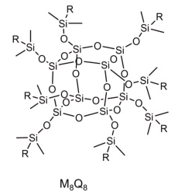
Structure of a MQ Resin where R is a vinyl group
For manufacturers, formulators, and end users, understanding the capabilities of VMQ resins is becoming increasingly important. These materials are helping enable the next generation of high-performance products where reliability and safety are essential requirements.
What does BRB offer?
VMQ resins are available in both liquid and powdered forms. BRB International offers a range of VMQ resin solutions, including VMQ 100 in powdered form, which can be dissolved in Vinyl Dimethicone for easy incorporation into formulations.
| Product Name | BRB MQ 325 | BRB MQ 330 | BRB MQ 339 | BRB MQ 393 | BRB VMQ 100 |
| Appearance | Colourless liquid | Colourless liquid | Colourless liquid | Colourless liquid | White Powder |
| Viscosity (cSt) | 5500 | 6500 | 6500 | 50000 | - |
| Vinyl Content (mmol/g) | 0.20 | 0.30 | 0.22 | 0.20 | 0.90 |
Upon request the VQM 100 can be diluted in different percentage and vinyl content.
Key applications
BRB VMQ resins are used in RTV-2 formulations to enhance mechanical properties when the standard building blocks alone are not sufficient. They can provide additional adhesion and tensile strength in adhesives and sealants, while also improving weather and heat resistance in coatings.
VMQ resins may not always be visible in the final product, but their impact on modern technology is undeniable. As innovation accelerates across industries, VMQ-based silicone solutions will remain a key driver of material performance and competitive advantage.
“The challenge is no longer whether silicone can meet application requirements, but how effectively formulators can combine the right building blocks to unlock the next level of performance.”