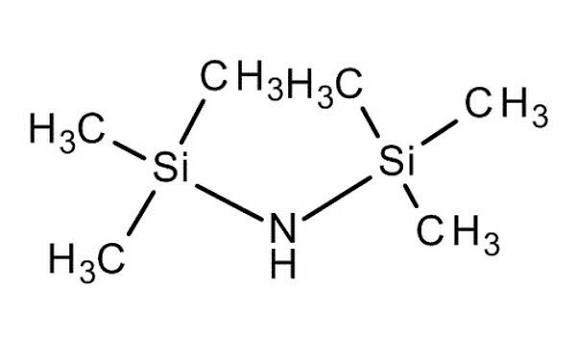

A Common Silicon Foundation: At their core, both silanes and disilazanes are built around silicon atoms capable of interacting with inorganic surfaces such as glass, silica, metals, ceramics, and mineral substrates. Traditional organofunctional silanes contain hydrolysable alkoxy groups, while disilazanes contain a characteristic Si–N–Si linkage. The most widely known example is Hexamethyldisilazane (BRB HMDZ).
Different Structures, Similar Objectives
Although silanes and disilazanes differ structurally, they often achieve similar goals: surface modification, hydrophobisation, adhesion enhancement, and the formation of durable silicon-containing surface layers. Both can ultimately form strong silicon-oxygen bonds with inorganic surfaces.
Why Disilazanes React Faster
Silanes, such as the BRB Silanil® range, typically release alcohols during hydrolysis, whereas disilazanes generate ammonia. Because the Si–N bond is highly susceptible to hydrolysis, disilazanes often react more rapidly with hydroxylated surfaces, making them particularly attractive for fast surface treatment and hydrophobicity development.
Surface Treatment: A Shared Application Space
Both technologies are used on concrete, glass, ceramics, mineral fillers, silicon wafers, and metal oxides. Silanes dominate as coupling agents in composites, adhesives, sealants, and coatings, while disilazanes excel in highly hydrophobic and thin surface treatments.
The Semiconductor Connection
Silanes are key precursors in chemical vapor deposition (CVD) processes. BRB HMDZ is widely used as an adhesion promoter in photolithography, converting hydroxyl-rich wafer surfaces into hydrophobic trimethylsilyl-terminated surfaces that improve photoresist performance.
In addition, disilazanes are increasingly being used as precursors for the deposition of silicon carbon nitride (SiCN) thin films and coatings through vapor deposition technologies.
Beyond Surface Chemistry
Disilazanes can also serve as precursors for silicon nitride and silicon carbonitride ceramics, enabling applications in aerospace, advanced coatings, electronics, and high-temperature materials.
Complementary, Not Competitive
Choose silanes when strong adhesion promotion, polymer compatibility, and organic functionality are required.
Choose disilazanes when rapid hydrophobisation, surface conditioning, or ceramic precursor chemistry is het priority.
As industries continue to demand smarter coatings, more durable construction materials, and increasingly advanced semiconductor technologies, understanding the relationship between silanes and disilazanes becomes even more important. Together they represent complementary tools.
BRB International B.V. offers both technologies through an extensive portfolio of silanes, including the BRB Silanil® range, as well as disilazanes such as BRB HMDZ, enabling customers to select the most suitable chemistry for their specific application.